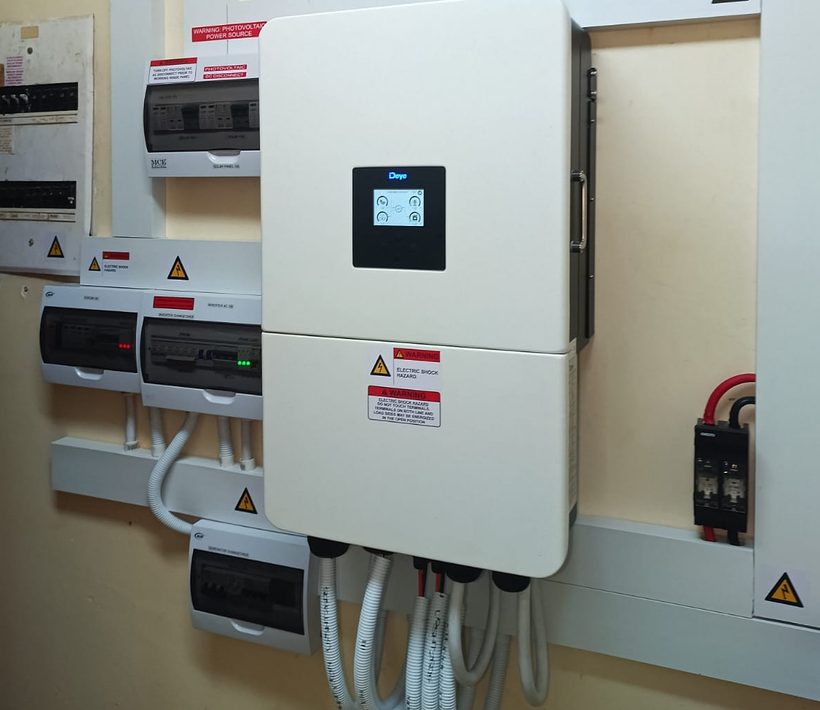
A business can have panels on the roof and still lose its internet, cameras, access control and dispatch workstation when the grid fails. What stays on depends on the inverter, the batteries, the protected circuits and the changeover, not on the number of panels visible from outside. So we start with the work that must continue, and design backwards from there.
How we approach it
- Agree the essential loads: what must keep working, at what level, and for how many hours.
- Measure actual demand, including the starting loads of anything with a motor or compressor.
- Size the inverter to the protected circuits, and the batteries to usable energy rather than a headline figure.
- Check the roof and the electrical path before promising anything.
- Install, commission and hand over with a witnessed acceptance test and a certificate of compliance.
- Maintain it afterwards, alongside the rest of your technology.
Savings and backup are different aims
Daytime savings and outage backup are not the same design. A grid-connected solar installation without suitable backup design may simply shut down during an outage. If what you want is for the business to keep trading when the power fails, say so at the start, because it changes the inverter, the wiring and the cost.
Bring these to the quotation meeting
A recent electricity bill, a list of essential circuits and equipment, typical operating hours, anything with a motor or compressor, and how long critical work must continue. Then the design can be measured rather than guessed, and competing quotations can be compared on the same basis.
Why the ICT company
Because the loads that matter most to a modern business are the ones we already install and support: the router, the switches, the access points, the phone system, the cameras and the access control. We know what they draw and what they need to survive an outage, and there is no second supplier to blame.
Questions we are asked
What size system do we need?
That depends on the essential load and the hours it must run, not on the size of the building. We measure the demand before quoting.
Will solar keep us running during an outage?
Only if it is designed to. A grid-tied system without proper backup design shuts down when the grid goes. Tell us you want backup and we design for it.
Do you provide a certificate of compliance?
Yes, and a witnessed acceptance test so the limits of the system are recorded and understood before sign-off.