- Published
- September 2026
- Length
- 5 pages
- Written for
- Warehouse and operations managers, finance managers and owners comparing solar and backup quotations.
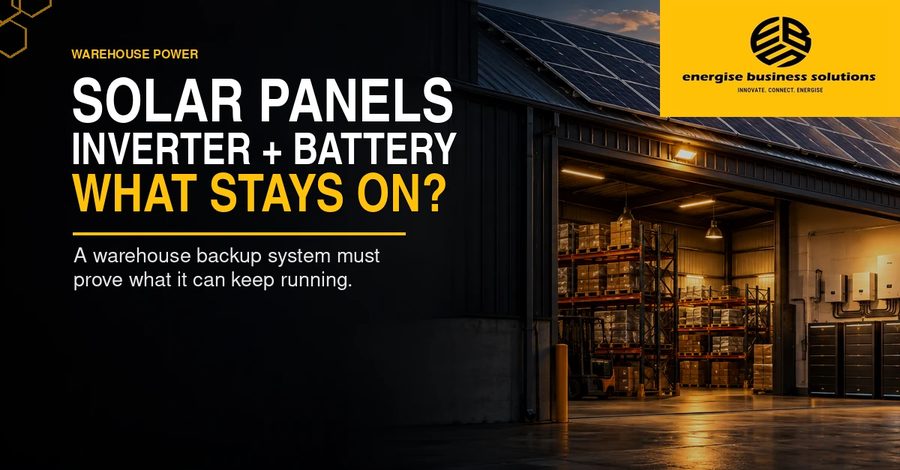
A warehouse can have solar panels on the roof and still lose its internet, cameras, access control and dispatch workstation when the grid fails. What stays on depends on how the inverter, batteries, circuits and changeover have been designed, not on the number of panels visible from outside.
What the report covers
- Define the work that must continue before sizing anything
- What each part of the system actually does
- Measuring demand, and allowing for starting loads
- Specifying duration using usable battery energy
- Deciding whether the aim is savings, backup or both
- Checking the roof and the electrical path
- Comparing quotations on the same basis
- A warehouse power decision record and acceptance test
Key points
- Panels generate in daylight; the inverter supplies the protected circuits within its limits; batteries cover the rest. A grid-connected system without suitable backup design may shut down during an outage.
- Some sites only need the network, phones, security and a few lights. Others need picking stations, roller doors, refrigeration or production equipment, and each choice changes the inverter, battery, wiring and cost.
- A useful proposal shows measured demand, starting loads, usable battery energy, protected circuits, operating limits and a witnessed acceptance test.
- Bring a recent electricity bill, a list of essential circuits, typical operating hours and anything with a motor or compressor to the quotation meeting.
Read the full report
The complete report, with the checklists and the decision record, is free to download.